

Who is accountable—and who is untouchable?
For families navigating family court, probate court, or Child Protective Services, one realization often comes too late: there are few meaningful ways to hold judges accountable when the system breaks down.
In Orange County, California, a rare and historic effort is now testing one of the state’s most powerful—and least understood—constitutional tools. After years of complaints raised by parents to presiding judges, the Orange County Grand Jury, the Orange County Board of Supervisors, the Orange County District Attorney’s Office, the Commission on Judicial Performance, federal authorities, and other oversight bodies, local families escalated their efforts by initiating judicial recall proceedings.
Orange County parents—working with the newly formed nonprofit California Family Law Naked Truth—gathered hundreds of signatures targeting six sitting family and probate court judges. The effort marks the first known attempt to recall multiple judges simultaneously in California, and one of the first such efforts nationally.
Organizers collected roughly 264 signatures per judge, far exceeding the minimum 50 signatures required to file a Notice of Intention. Volunteers report that while many residents signed readily, others declined, citing fear of retaliation, professional consequences, or ongoing court involvement.
Recalling six judges at once is unprecedented in California history.
Who Is Being Recalled
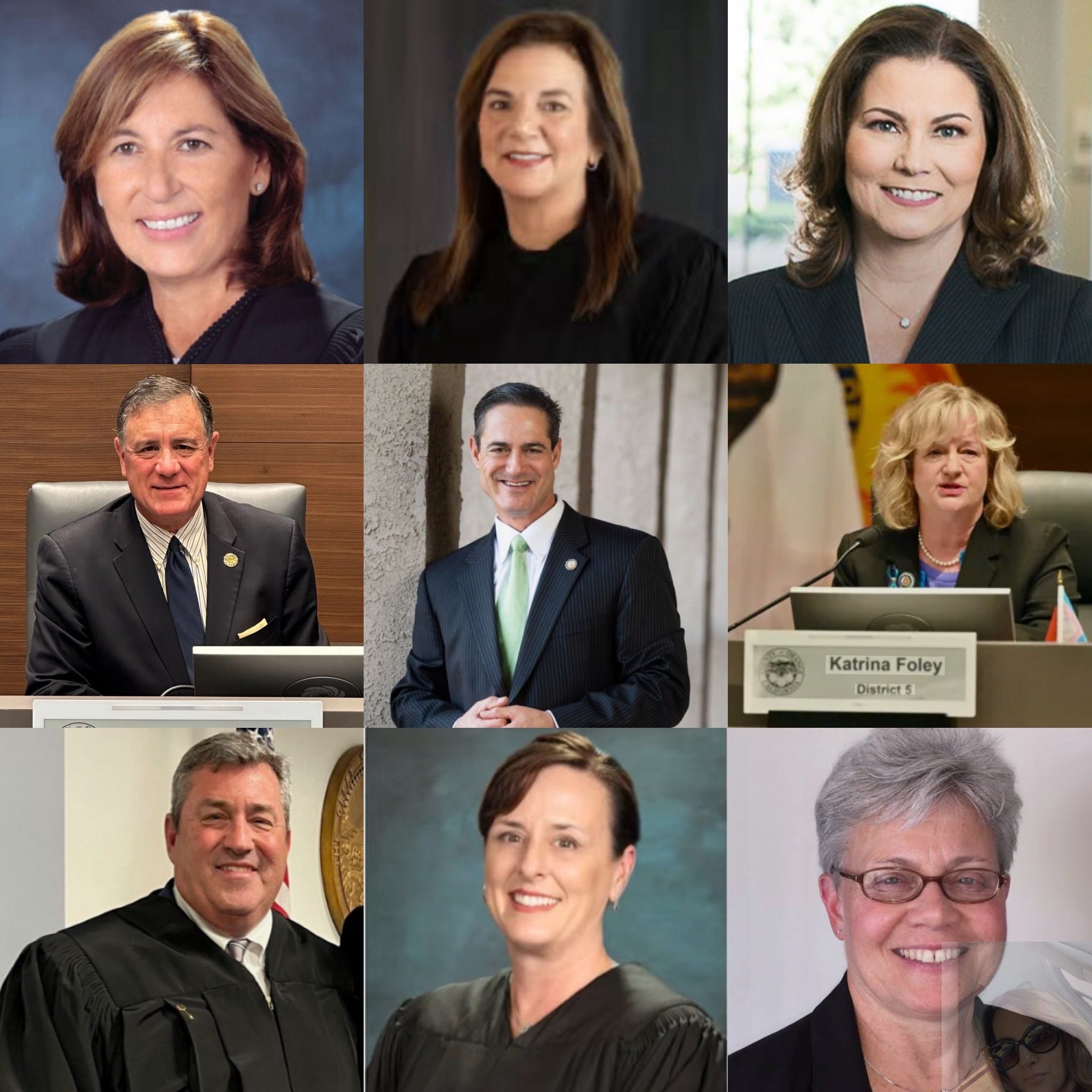
The judges named in the Orange County recall effort are Carol L. Henson, Julie A. Palafox, Stephen Hicklin, Mary Kreber-Varipapa, Kimberly Maynard Carasso, and Maria D. Hernandez.
Organizers say the recall spans multiple family and probate court assignments and reflects concerns raised across unrelated cases, rather than a single dispute or ruling.
The effort is supported by hundreds of Orange County families and California Family Law Naked Truth, a newly formed local court-reform advocacy group that has held press conferences and protests and documented complaints across multiple court divisions.
Much of the signature-gathering effort was carried out by parent volunteers, including Lucy Vellema, Joaquin Castillo, Steve Padilla, Christine Fleming, and Bridget Butler, along with others who requested anonymity.
Why Judicial Recall Exists in California
Judicial recall in California is a foundational Progressive Era reform adopted in 1911, when voters amended the state Constitution to allow recall of judges alongside legislators and executive officials.
Reformers of the era warned that unchecked judicial authority—particularly in trial courts—could quietly enable corruption, favoritism, or systemic abuse. Recall was designed as a safeguard for extraordinary circumstances, when institutional oversight failed and public confidence in the courts collapsed.
“How best can we arm the people to protect themselves hereafter?... We can give to the people the means by which they may accomplish such other reforms as they desire, the means as well by which they may prevent the misuse of the power... The first step in our design to preserve and perpetuate popular government shall be the adoption of the initiative, the referendum, and the recall.” —Gov. Johnson Inaugural Address Jan. 3,1911
Judicial recall exists alongside judicial independence, not in opposition to it. It was designed as a constitutional backstop when confidence in the courts collapses—not as a substitute for appellate review or routine disagreement with rulings.


Why Recall Helped Lead to Judicial Discipline Reform—and Why It Is Reemerging
A historical analysis published in the Loyola of Los Angeles Law Review found that by 1937, California’s three traditional methods for removing unfit judges—recall, impeachment, and internal oversight—were widely viewed as “awkward, inefficient, and incapable of meeting the demands of a viable system of judicial discipline.” That assessment, combined with mounting public and professional pressure through the 1940s and 1950s, made reform unavoidable.
In response, California voters approved a 1960 constitutional amendment establishing the Commission on Judicial Qualifications, later renamed the Commission on Judicial Performance (CJP) in 1976. The intent was to create a centralized, independent body capable of investigating judicial misconduct without the cost, delay, or political volatility associated with recall or impeachment.
Under California law, the CJP may dismiss complaints, issue advisory letters, impose private or public admonishments, issue public censures, and remove judges or order involuntary retirement. Constitutional amendments taking effect in 1995 further expanded the commission’s authority, allowing it to impose all forms of judicial discipline subject to discretionary review by the California Supreme Court.
Since gaining that authority, the commission has imposed limited public discipline relative to complaint volume. Since 1995, the CJP states it has removed 14 judges, issued 50 public censures, 17 public reprovals, and 132 public admonishments, in addition to limited private discipline.
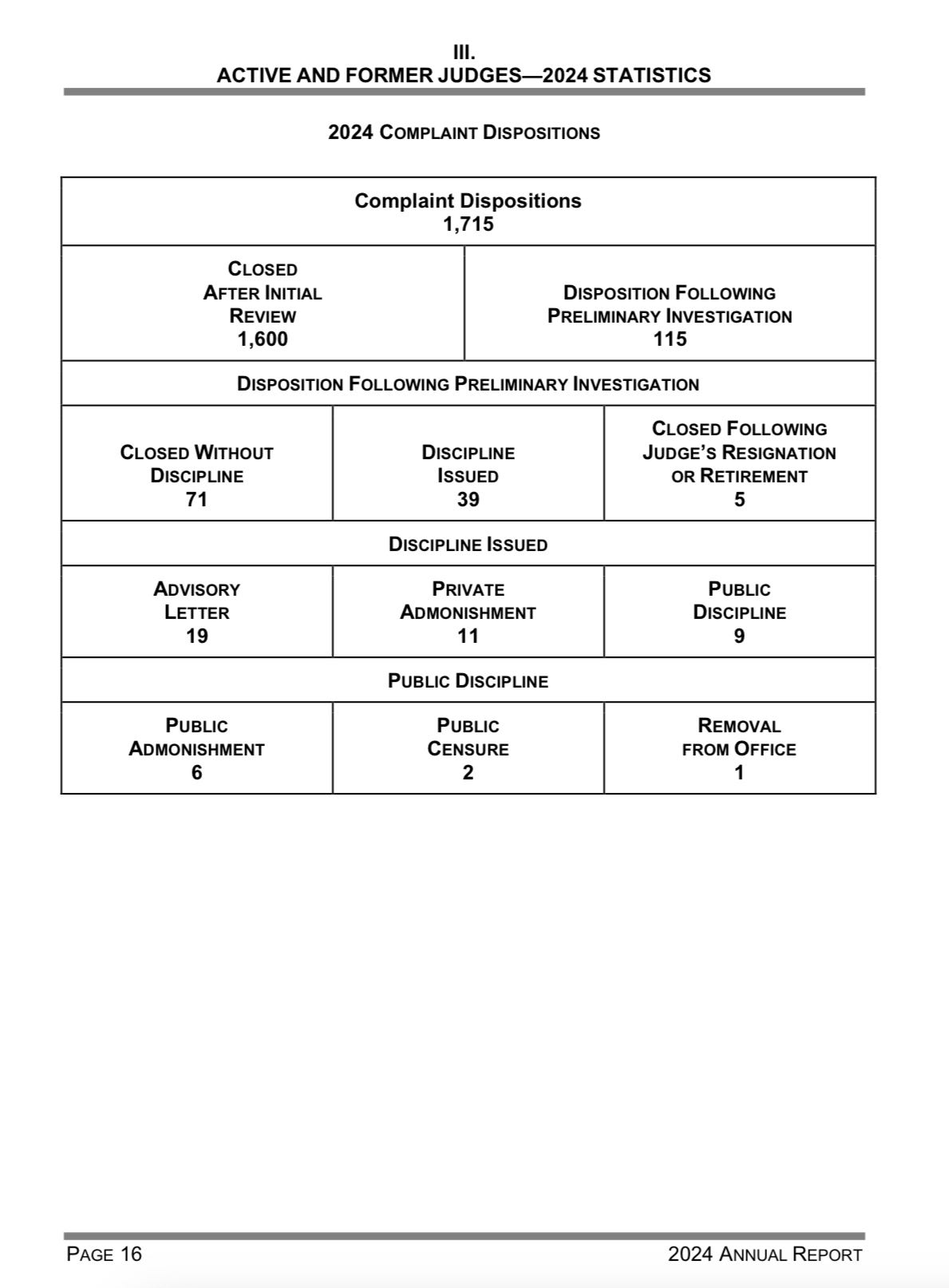
The scope of the system it oversees is extensive. As of Dec. 31, 2024 the CJP annual report, California’s judiciary included seven Supreme Court justices, 106 Courts of Appeal justices, and 1,755 Superior Court judges, totaling 1,868 judicial officers statewide.
Complaint volume remains high. In 2024, the commission considered 1,718 new complaints. Those complaints named 2,095 judges, representing 1,153 different judicial officers. The commission initiated 117 preliminary investigations.
Family law matters accounted for the largest share of complaints (29%), followed by criminal cases (28%) and general civil matters (25%). Smaller portions involved traffic and small claims (5%), other case types (8%), and off-bench conduct (5%).
Most complaints—86%—were filed by litigants, family members, or friends. Far fewer originated from attorneys (5%), judges or court staff (2%), members of the public (5%), or external sources such as news reports (2%).
Accountability outcomes remain limited. In 2024, the commission closed 1,600 complaints without preliminary investigation, often citing insufficient evidence of misconduct or allegations of legal error rather than ethical violations. Another 71 matters were closed after preliminary investigation without discipline. That same year, the commission removed one judge, publicly censured two judges, issued six public admonishments, along with 11 private admonishments and 19 advisory letters.
This history underscores a central point: judicial recall was never intended to replace disciplinary systems like the Commission on Judicial Performance. It exists as a constitutional backstop, reserved for moments when oversight mechanisms are perceived to stall, fail, or lose public confidence.
For parents now pursuing recall—particularly in family and probate courts—the concern is not the absence of formal oversight, but that existing systems have not responded meaningfully to repeated complaints alleging judicial bias, disregard of evidence, tolerance of perjury, violations of judicial canons, and decisions affecting child safety and victims of abuse with long-term consequences.
California’s Recall History
1932: When the Organized Bar Forced the Recall of Three Superior Court Judges
One of the most consequential—and often misunderstood—uses of judicial recall in California occurred in 1932, when the Los Angeles County Bar Association mounted a successful campaign to remove three sitting Los Angeles Superior Court judges amid allegations of systemic corruption.
At the time, California had no Commission on Judicial Performance. As legal scholar Wilbank J. Roche later noted in Judicial Discipline in California: A Critical Re-Evaluation, only three mechanisms existed for removing judges from office: recall, impeachment, and concurrent legislative resolution.
In April 1932, the Los Angeles County Bar Association issued an ultimatum to Superior Court Judges John L. Fleming, Dailey S. Stafford, and Walter Guerin: resign immediately or face recall elections. The action followed the Bar’s unanimous adoption of a 47-page investigative report condemning how the judges handled state receiverships.
The report described what contemporaneous observers characterized as a “pay-to-play” system, in which judicial appointments of receivers were treated as political patronage rather than merit-based assignments. According to historical reporting by the Metropolitan News-Enterprise, receivers were allegedly selected based on campaign loyalty rather than qualifications, awarded excessive fees, and, in some instances, provided gifts or loans to judges. The reporting further described receivership funds being deposited in banks in which judges held financial interests, while receivers spent money freely on court insiders and members of the press.
Scholarly analysis later reinforced those findings. A Loyola of Los Angeles Law Review examination of California’s pre-1960 judicial discipline system concluded that recall, impeachment, and internal court oversight had proven “awkward, inefficient, and incapable of meeting the demands of a viable system of judicial discipline,” particularly in addressing systemic ethical breakdowns at the trial-court level. That convergence of investigative journalism and legal scholarship helped cement recall’s role as a necessary—if blunt—accountability tool in the absence of an independent disciplinary body.
The Bar ultimately concluded that Fleming, Stafford, and Guerin had “conducted themselves in a manner contrary to judicial ethics and prejudicial to the proper administration of justice.”
As recall petitions circulated, the Los Angeles County Grand Jury simultaneously took testimony, and press reports documented admissions by the judges that they had accepted clothing and other items from receivers. By August 1932, sufficient signatures had been gathered, and a special recall election was scheduled for Nov. 8.
The recalls succeeded. Replacement judges were elected to fill the vacancies.
The episode stands as a defining example of judicial recall operating exactly as intended—not as a response to unpopular rulings, but as a last-resort accountability mechanism when allegations of corruption overwhelmed existing safeguards and no independent disciplinary body yet existed.
1986: Retention Elections, Not Recall — Why the Distinction Matters
California’s most consequential judicial removal came in 1986, when voters declined to retain Chief Justice Rose Bird and Associate Justices Cruz Reynoso and Joseph Grodin.
Though conducted through retention elections rather than recall petitions, the result was the same: removal by popular vote. The episode reshaped California’s judiciary for decades and underscored that judicial accountability ultimately rests with the voters.
2015: An Orange County Recall Attempt That Fell Short
In 2015, supporters attempted to recall Orange County Superior Court Judge M. Marc Kelly following a controversial sentencing decision in a child sexual-assault case. Then–Orange County District Attorney Tony Rackauckas appealed the sentence, arguing that it failed to comply with mandatory minimum sentencing requirements under California law.
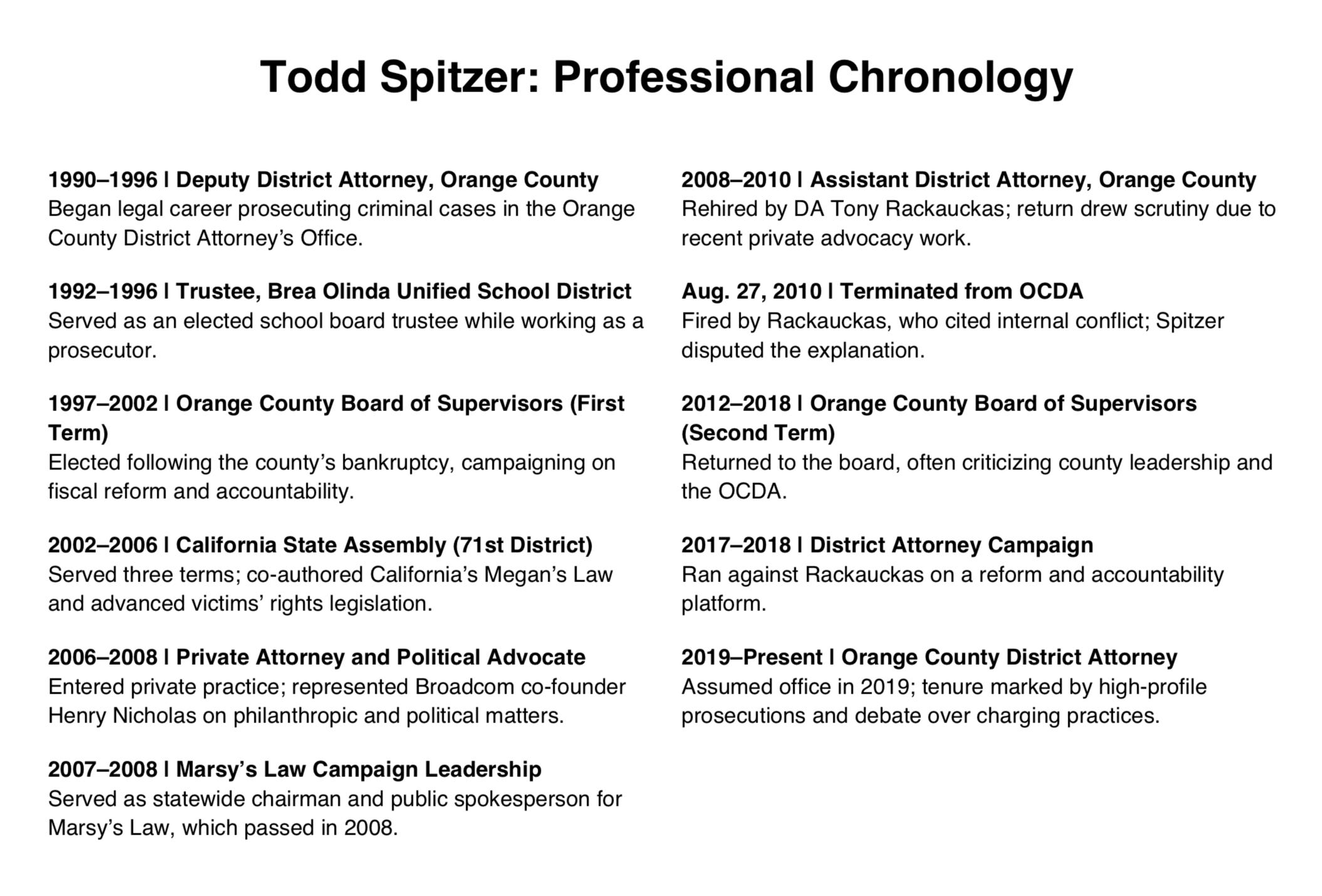
In response, the Orange County Board of Supervisors—led at the time by Chair Todd Spitzer, and joined by Supervisors Shawn Nelson and Lisa Bartlett—held a press conference and placed a formal resolution on its agenda criticizing the ruling.
Spitzer publicly criticized the sentence, stating that Judge Kelly had failed to follow state law. “We don’t want a judge that legislates from the bench,” Spitzer said in media interviews.
On April 21, 2015, the board unanimously adopted a resolution repudiating Judge Kelly’s ruling, declaring it had no confidence in his willingness to faithfully administer California law, calling for his resignation, and supporting the district attorney’s appeal. The resolution stated that the sentence posed a risk to child safety in Orange County. Watch full board meeting here and view agenda here.


An advocacy group, Remove Judge M. Marc Kelly From the Bench, served Judge Kelly with a Notice of Intention to Recall. Despite public attention, recall proponents did not collect the required 90,829 valid signatures needed to place the recall on the ballot.
The appellate process continued. On Feb. 1, 2017, the California Court of Appeal ordered resentencing consistent with statutory requirements, mandating a term of at least 25 years to life. Judge Kelly remained on the bench and is currently assigned to the Harbor Justice Center in Newport Beach.
2025: OC’s Shift in Oversight Response
That response contrasts sharply with the past decade, during which Orange County Board of Supervisors members and other state and county oversight bodies, including the CJP, have not publicly reprimanded judges, called for resignations, or sought formal intervention despite repeated complaints and protests from parents and advocates alleging disregard for child-safety laws and protections for abuse victims in the county’s courts.
At a Dec. 2 meeting of the Orange County Board of Supervisors, parents urged county leaders to formally request an investigation by the FBI and the U.S. Department of Justice into what they described as systemic failures affecting child and parent safety in family court.
Video of the meeting shows supervisors declining to engage substantively, with some speakers cut off during their allotted time. Statements from the dais asserted that the board had “no jurisdiction” over the courts, and Supervisor Don Wagner advised parents to “hire a lawyer.” No agenda item or resolution was introduced.
Watch full Dec. 2 OC BOS meeting here starting at agenda item 21, 23 and through to public comment.
At a subsequent Dec. 11 meeting, parents again called on supervisors to request a federal investigation—naming judges, minors’ counsel, attorney Brian Baron, and court-appointed therapists, including Jessica St. Clair. The board again declined to take action.
That contrast helps explain why Orange County parents are now turning to judicial recall—a constitutional tool rarely used, but designed for moments when other oversight mechanisms fail to produce accountability.
2018: Recall Returns to the Trial Courts
In 2018, Santa Clara County voters recalled Superior Court Judge Aaron Persky after his sentencing of Brock Turner. The recall marked the first successful judicial recall in California in more than 80 years.
Why Recalls Were Rare—and Why That’s Changing
Judicial recall has long been rare in California and nationwide. Many voters—even in states that permit recall—remain unaware that judicial recall is an available option, and only a small number of states allow voters to recall judges at all.
High signature thresholds, significant costs, concerns about institutional retaliation, and judicial pressure framing recalls as threats to judicial independence have historically discouraged their use.
That dynamic is beginning to change.
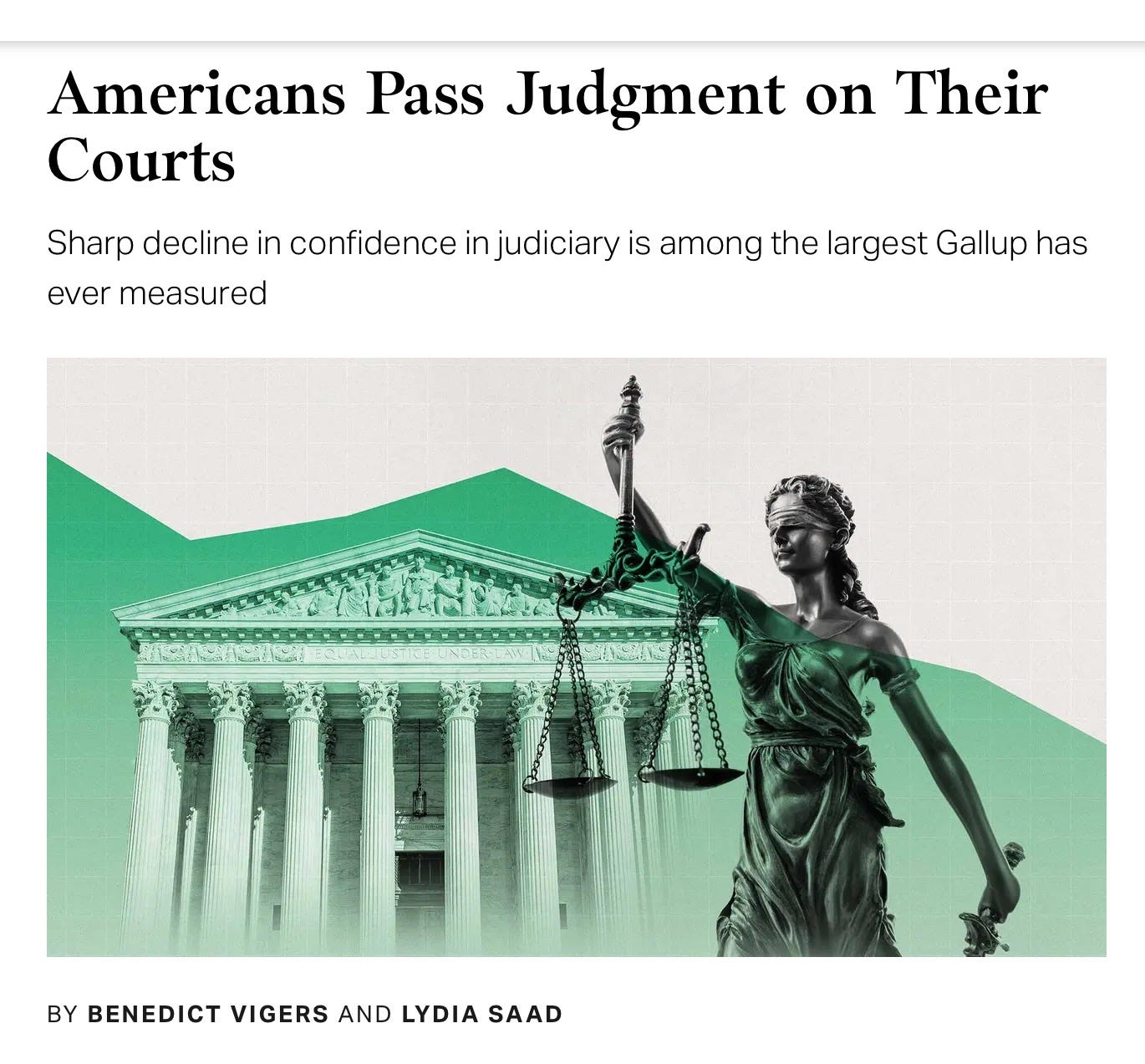
Public trust in the courts has eroded sharply. Coupled with perceptions of limited disciplinary action by the Commission on Judicial Performance, a December 2024 Gallup poll found that confidence in the U.S. judicial system and courts had fallen to 35%, the lowest level recorded in Gallup’s tracking. Surveys by the National Center for State Courts report that about 63% of respondents express “a great deal” or “some” confidence in state courts. However, those same surveys reveal significant disparities by race, gender, and court experience, along with persistent concerns about fairness, access, and accountability—particularly in high-stakes trial courts.
Research published by the Pew Research Center underscores why those distinctions matter. Court contact is widespread, and for many families, real-world experiences in civil proceedings involving custody, conservatorships, domestic violence, and child welfare shape confidence far more than abstract approval ratings. In family and probate courts, litigants frequently report barriers that erode trust regardless of formal outcomes.
In that context, California’s constitutional authority to recall judges operates as a democratic backstop—one of the few mechanisms available to voters when trial-court failures are perceived as chronic, insulated, and resistant to ordinary oversight. Higher aggregate trust scores for state courts do not negate evidence of uneven and contested confidence at the trial-court level, particularly in family and probate courts, where decisions can have immediate and life-altering consequences for children and families.
In Orange County, where six family and probate court judges now face active recall efforts, these national confidence gaps take on concrete meaning for families who say the consequences of judicial failure are not abstract, but deeply personal.
Families and advocates allege that in some custody disputes, the Orange County District Attorney’s Office has declined to pursue child-abuse and domestic-violence allegations while advancing—or permitting—custody-interference or abduction theories that carry criminal consequences for protective parents. They point to repeated involvement by the OCDA’s Family Protection Unit, including its child-abduction function, and to a small group of prosecutors and investigators appearing across multiple cases, like Tawny Minna Grossman, Tar Nolan, and Joy Houghton. The district attorney’s office has not publicly addressed whether internal policies govern these charging decisions.
Similar concerns have been raised in other California counties. In the Giselle Smiel case out of Los Angeles and San Diego Counties. In Santa Clara County, members of the county’s Child Abuse Prevention Council panel and national expert Dr. Joan Meier have publicly described comparable patterns involving the treatment of abuse allegations in family court–adjacent proceedings.
California residents:
Residents outside California:
Can California Voters Start a Judicial Recall Themselves?
Yes. In California, any registered voter may initiate a recall of an elected official—including a Superior Court judge—by working with other registered voters and following procedures set out in state law. Voters who sign and file the Notice of Intention are legally designated as proponents (Cal. Elec. Code § 11005).
The California Secretary of State publishes a recall handbook that outlines statutory requirements, timelines, and templates for the Notice of Intention and recall petition (Cal. Elec. Code §§ 11020–11023, 11040–11047). Some counties, including Orange County, also publish supplemental handbook and administrative instructions tailored to local election procedures.


Where to Obtain Official OC Recall Information
Proponents and members of the public seeking procedural updates or access to publicly available records related to the judicial recall process may contact the Orange County Registrar of Voters:
Orange County Registrar of Voters
Main line: 714-567-7600
1300 South Grand Avenue, Building C
Santa Ana, CA 92705
(Corner of Grand Avenue and McFadden)
MediaSupport@ocvote.gov
https://ocvote.gov/fileadmin/vc/contact.html
Voters in other counties should consult their local registrar of voters’ website for official recall procedures, timelines, and public records access.
Law vs. Internal Politics: Who May Initiate, Sign, and Serve a Judicial Recall in California
California law does not recognize recall “ownership.” A judicial recall belongs to all the qualified proponents who sign the notice launching the effort, not to any individual, document preparer, nonprofit, consultant or organizer who later claims leadership or control.
Advocacy organizations, social media influencers, community groups and informal coalitions may work alongside recall proponents to raise public awareness, help collect signatures, track deadlines and encourage civic participation. But those groups do not gain legal authority over the recall.
That structure is not new. In past Orange County recall efforts — including a 2015 attempt involving Superior Court Judge M. Marc Kelly — multiple proponents, advocacy groups, elected officials and institutional actors participated at the same time, each playing different roles. No single individual or organization “owned” the recall. Legal authority rested with the official proponents, while political support and public messaging came from a broader coalition.
California law does not require recall proponents to belong to the same organization, social media influencers, name a leader, form a nonprofit or agree on any internal hierarchy. Authority comes from meeting legal requirements, not from funding, titles, branding or informal claims of control.
Once a recall effort formally begins — through filing and serving the required notice — procedural authority rests with the proponents defined by law (Cal. Elec. Code § 11005). That authority cannot be transferred, reassigned later or overridden by organizations or committees formed after the fact.
The distinction becomes especially important when campaign finance committees are created. Under state law, a recall is treated like a ballot measure, and a political committee must register once it raises or spends enough money to support or oppose the effort. Those committees regulate fundraising, disclosures and paid messaging only. They do not control the recall process itself.
See: FPPC POLITICAL REFORM ACT 2024
For administrative convenience, elections officials may designate a primary contact person. That role exists solely to facilitate communication and does not confer legal control or ownership of the recall.
No proponent, nonprofit, committee or organizer may lawfully block public access to recall records, claim exclusive control over information or require that public-records requests be routed through them. Recall filings held by elections officials are public records and must be made available to anyone, regardless of internal disputes, organizational ties or claimed leadership status.
See: California Public Records Act (Gov. Code §7920.000 et seq.
Can You Recall a Judge in Your State?
That depends entirely on where you live.
As of the most recent national reviews of state recall laws, voters may initiate recall elections against judges in only a small number of states, where recall provisions explicitly—or through broad constitutional language—include judicial officers. Those states include Arizona, California, Minnesota, Montana, North Dakota, Oregon, and Wisconsin.
In most states, judges cannot be recalled by voters midterm—even where recall exists for other elected officials. Instead, judicial accountability is typically limited to appeals, judicial conduct commissions, impeachment, or retention elections, processes critics argue are often slow, opaque, or ill-suited to addressing systemic trial-court failures affecting families and children.
The absence of judicial recall does not leave voters powerless, but it does narrow their options. In states without recall, voters may contact legislators to pursue recall legislation, statutory or constitutional reforms, including enhanced oversight mechanisms, changes to retention-election rules, or expanded transparency requirements. Whether those avenues succeed often depends on pressure from the public.
The question facing voters nationwide is not whether courts should remain independent, but whether independence without meaningful accountability ultimately undermines public trust—particularly in family and probate courts, where decisions can have immediate and lasting consequences for children and families.
Why This Moment Matters
Judicial recall is not a rejection of the rule of law. It exists alongside judicial independence—not in opposition to it—and was designed as a constitutional backstop when institutional safeguards fail to produce accountability.
In that sense, the Orange County recall reflects the precise scenario California’s recall provision was written for: a moment when the public believes the systems meant to protect the vulnerable have instead insulated themselves from meaningful oversight and accountability—a concern now echoed across the nation.
This ongoing series on the Orange County family and probate court crisis—and the broader nationwide family court crisis—aims to bring national attention to systemic failures and to advocate for meaningful reform and accountability.
This article is investigative reporting intended for public-information and public-interest purposes only. It does not constitute legal advice, and nothing herein should be relied upon as a substitute for consultation with a licensed attorney or qualified legal professional. References to laws, court proceedings, or legal processes are presented for journalistic and informational purposes.
The time for action is now. Lawmakers, the media, and the public must act together to demand justice, accountability, and protection for families and children.
Are you committed to protecting America’s children and restoring integrity to our legal system?
Contact your legislative representatives. Speak out. Reach out to media outlets. And vote. Find your state and federal legislative representatives HERE.
Whistleblowers and victims of family court, CPS, probate court, IDEA/ADA or foster care corruption anywhere in the U.S.—please contact this reporter at juliea005@proton.me or rjh.investigative.reports@gmail.com.
Together, we can ignite a national movement and create lasting change.
Julie M. Anderson-Holburn is a California-based investigative journalist reporting on criminal and family court corruption, judicial abuse, domestic violence, child abuse and systemic failures. Her work is published on NewsBreak, Substack, and The Family Court Circus, and has been featured by the Center for Judicial Excellence and National Safe Parents. Julie believes that exposing the truth is the first step toward meaningful reform.
This article was made possible by the support of readers like you. Thank you.
Suggested reading on California’s judiciary discipline and OC’s leadership history:
Investigation of California Commission on Judicial Performance Both Hits and Misses the Mark
Commission on Judicial Performance—Weaknesses in Its Oversight Have Created Opportunities for Judicial Misconduct to Persist
Judicial Discipline in California: A Critical Re-Evaluation
Victims’ advocates serve petition to start process to recall O.C. Judge M. Marc Kelly
Official attempt underway to recall O.C. Superior Court judge
DA Under Scrutiny for Not Disclosing Private Jet Trip from Billionaire Henry Nicholas
Before he was on D.A.’s staff: Spitzer was lawyer for indicted Broadcom billionaire
Rackauckas Fires Todd Spitzer From District Attorney’s Office
Related coverage from California and Arizona:
UPDATE: Six Orange County Family Court Judges Respond to Recall Petitions
BREAKING: Six Orange County Family Court Judges Served With Recall Petitions
FOR IMMEDIATE RELEASE — Rally and Court Watchers Requested for Nov. 7 in Orange County, Calif.
FOR IMMEDIATE RELEASE—COURT WATCHERS REQUESTED FOR OCT. 20 GISELLE SMIEL CASE IN LOS ANGELES
Orange County DA’s Office: Jury Awards $3M Over Culture of Malice and Retaliation Against Women
Leanne fled the country to escape domestic abuse. Now she could face jail.
The Victims of Jessica St. Clair, Parents and Children Share Their Trauma, Part Two
Whistleblowers Reveal Corruption in Orange County Family Courts and Beyond
Orange County DA’s Office Hostile to Women: Unprotected OC Women Suffer Under Spitzer’s Retaliation
Orange County Protest to Spotlight Family, Probate and Juvenile Court Failures, Sept. 17
Orange County Parents Speak Out Against Family Court and CPS in Nationwide Protest
Retaliation in Hackensack: Dr. Bandy X. Lee, Bruce Fein Confront Family Court Over First Amendment
Arizona’s Final Committee Hearing on Family Court Failures and the National Reform It Demands
Octo-Mom’s Former Attorney Sued: Client Alleges Collusion and Rigged Custody Case
Exclusive: OC Custody Evaluator Under Investigation After Molestation Case; BBS Ignored Complaints
Exclusive: Unveiling the legal battle in Orange County that no one else dares to report
This recall didn’t come out of nowhere. It came after every “respectful” channel failed. Appeals failed. Complaints failed. Oversight failed. And when parents finally showed up at public meetings, they were told to sit down, lawyer up, or shut up. Judicial independence is not a suicide pact. It does not mean lifetime insulation from consequences while kids get hurt and evidence gets ignored. Recall is not mob justice—it’s constitutional self-defense. When a system closes ranks and refuses to correct itself, voters are the last circuit breaker. Orange County flipped the switch. The rest of the country is watching.
I have zero confidence in family court.
Judge Veripapa got the ball rolling to destroy our family. I would love to go testify about my eight year nightmare of trauma which is still ongoing. I start a criminal trial this month for responding to my child’s texts out of custodial time. I have 30% time and an RO if you can imagine that all stemming from texts I sent my ex almost 8 years ago in step 1 of his set up. He has had multiple CPS investigations and is treated like a king in court when you have millions at your disposal it’s a pay to play courthouse they destroy me because I can’t pay attorneys just a broke single mom that will never walk away from her children and they use that as their weapon my love it’s evil and corrupt.